Clinical Evidence Review
Does Inclisiran Maintain LDL-C Lowering in CKD? Phase 3 Pooled Data Suggest Consistent Efficacy Across eGFR Strata
Posted on 3 July 2026 6 mins read
This content is intended for healthcare professionals as clinical decision-support education. It supports, but does not replace, independent clinical judgement.
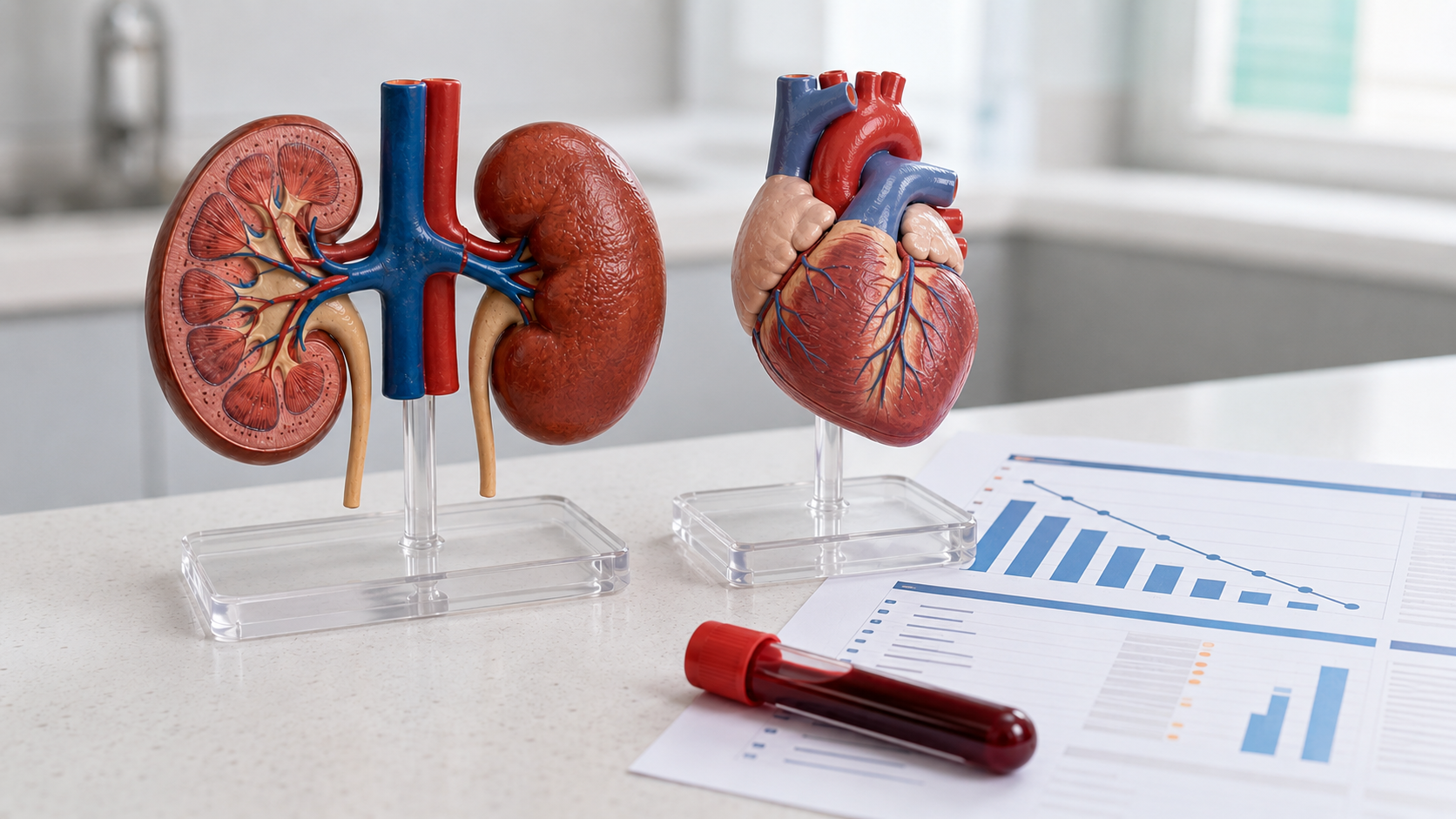
Residual atherosclerotic cardiovascular disease (ASCVD) risk in chronic kidney disease (CKD) often persists despite statin-based therapy, yet renal-specific confidence still matters before escalation. A recent post hoc pooled phase 3 analysis reported placebo-corrected low-density lipoprotein cholesterol (LDL-C) reduction of about 50% with inclisiran across baseline estimated glomerular filtration rate (eGFR) strata, including down to 15 mL/min/1.73 m², without new safety signals, although direct cardiovascular outcomes evidence for inclisiran remains incomplete.
Why Renal Function Complicates Lipid Escalation
For specialists managing cardiorenal risk, the central question is no longer whether CKD amplifies atherogenic burden, but whether newer lipid-lowering strategies retain predictable effect as renal function declines. The Malaysian dyslipidaemia guideline treats CKD as a high-risk state within broader cardiovascular prevention and positions statins as foundational therapy, with inclisiran recognised as an additional LDL-C lowering option that can achieve roughly 50% reduction and has shown a favourable short-term safety profile, including no serious renal signal in mild to moderate CKD.
That framing matters because therapeutic inertia in CKD is often driven by uncertainty rather than by absence of residual risk. Evidence synthesis indicates that inclisiran is most compelling as a next intensification step when LDL-C remains above target despite maximally tolerated statin therapy, usually after ezetimibe, particularly in patients at high or very high ASCVD risk and when infrequent dosing offers a practical advantage. The brief question, therefore, is not simply whether inclisiran lowers LDL-C in CKD, but whether its phase 3 signal remains robust enough across eGFR strata to justify confident escalation in routine specialist care.
Pooled Phase 3 CKD Analysis
Day 510 Placebo-Corrected LDL-C Reduction
−49.9% to −54.7%
eGFR at least 45 in most strata
−44.7%
eGFR 15 to less than 45
What the ORION Data Show, and What They Do Not
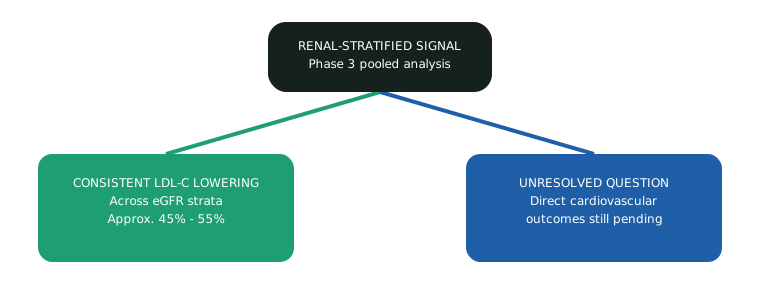
The most directly relevant renal-stratified evidence comes from the 2026 post hoc pooled analysis of ORION-9, ORION-10, and ORION-11. In that analysis, inclisiran produced statistically significant placebo-corrected LDL-C reductions at Day 510 across all baseline eGFR categories: −49.9% for eGFR at least 90, −51.2% for eGFR 60 to less than 90, −54.7% for eGFR 45 to less than 60, and −44.7% for eGFR 15 to less than 45 mL/min/1.73 m². Time-adjusted LDL-C reduction from Day 90 to Day 540 was likewise close to 50% across strata, arguing against a transient early effect and supporting durable pharmacodynamic activity despite reduced kidney function.
These findings are directionally consistent with the pivotal phase 3 efficacy benchmark established earlier in ORION-10 and ORION-11, where inclisiran, added to maximally tolerated statin therapy, reduced LDL-C by about 50% at Day 510 versus placebo in patients with ASCVD or ASCVD risk equivalents. The 2021 pooled patient-level analysis across ORION-9, ORION-10, and ORION-11 similarly found effective and well tolerated LDL-C lowering in populations with heterozygous familial hypercholesterolaemia, ASCVD, or risk equivalents, reinforcing that the CKD signal sits within a broader, internally coherent trial programme rather than as an isolated subgroup observation.
Still, source hierarchy matters. The renal analysis is post hoc, not a prospectively stratified outcomes trial, and neither it nor the earlier pooled efficacy analyses resolve whether equivalent LDL-C lowering across CKD strata translates into equivalent reductions in hard cardiovascular events for inclisiran itself. The Malaysian guideline explicitly notes that outcomes data remain awaited despite the lipid-lowering signal. That distinction, lipid efficacy versus event reduction, remains the key interpretive boundary for specialists.
How to Read the Renal-Stratified End Points
The CKD-focused pooled analysis is useful not only because it reports Day 510 LDL-C end points, but because it also includes time-adjusted response from Day 90 to Day 540 and additional atherogenic markers. Across eGFR subgroups, inclisiran significantly reduced total cholesterol, apolipoprotein B, non-high-density lipoprotein cholesterol (non-HDL-C), and lipoprotein(a), which strengthens the mechanistic coherence of the LDL-C finding rather than leaving it as a single isolated biomarker effect.
From a measurement standpoint, this matters because CKD-associated dyslipidaemia is clinically heterogeneous, and a durable effect across several atherogenic lipoprotein measures is more reassuring than a one-time LDL-C decrement alone. Even so, the appropriate reading is pharmacodynamic consistency, not proof of renal-specific clinical benefit. Evidence synthesis indicates that, in routine monitoring, specialists should focus on baseline lipid profiling, reassessment at about 2 to 3 months, then a more definitive check after the second dose and periodically thereafter, because inclisiran’s biological effect is expected to be sustained once the loading sequence is complete.
| eGFR stratum (mL/min/1.73 m²) | Day 510 placebo-corrected LDL-C change | Interpretation |
|---|---|---|
| At least 90 | −49.9% | Aligned with broader ORION efficacy benchmark |
| 60 to less than 90 | −51.2% | No attenuation in mild renal impairment |
| 45 to less than 60 | −54.7% | Preserved effect in moderate CKD |
| 15 to less than 45 | −44.7% | Still substantial, though numerically lower |
Why the Mechanism Appears Preserved Across CKD
The mechanistic inference supported by the available sources is straightforward: CKD increases cardiovascular risk and does not abolish the relevance of low-density lipoprotein receptor pathway modulation, so RNA interference against proprotein convertase subtilisin/kexin type 9 (PCSK9) can still produce meaningful LDL-C lowering across impaired renal function. The phase 3 CKD analysis, together with earlier renal impairment work cited in evidence synthesis, suggests that even where drug exposure changes with worsening renal function, the clinical LDL-C lowering effect remains preserved enough that standard dosing is retained in mild, moderate, and severe renal impairment not requiring dialysis.
That pharmacological stability has practical consequences. Evidence synthesis indicates that reduced eGFR alone does not require adjustment of inclisiran dose or administration interval in stage 3 to 4 CKD: the regimen remains 284 mg subcutaneously at day 0, again at 3 months, then every 6 months. There is also no inclisiran-specific requirement for intensified renal laboratory surveillance beyond routine CKD care, although usual renal follow-up should of course continue because of the underlying kidney disease rather than because inclisiran itself demands titration by renal markers.
Positioning Inclisiran in Specialist CKD Practice
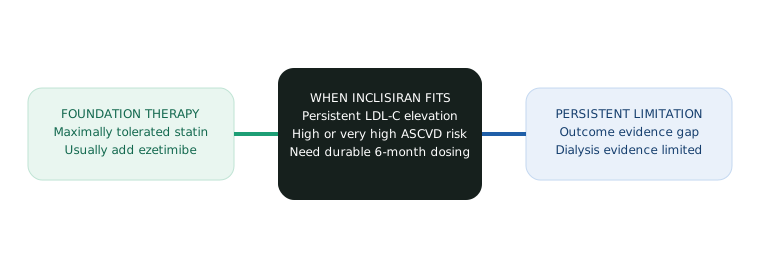
In practical terms, the most defensible position is to view inclisiran as a renal-compatible intensification option rather than a renal-specific therapy. Evidence synthesis indicates that in CKD it is most appropriate when LDL-C remains above target on maximally tolerated statin therapy, usually after ezetimibe, especially in secondary prevention or otherwise very high-risk ASCVD settings where durable LDL-C reduction is important and infrequent dosing may improve treatment delivery. Monitoring should emphasise lipid response and tolerability, especially injection-site reactions and hypersensitivity, while routine CKD laboratory follow-up continues according to disease stage and comedication rather than to any special inclisiran protocol.
Evidence synthesis further suggests a practical continuation framework: expected LDL-C reduction is about 50%, so continuation is reasonable when response is in the approximate 40% to 50% range or when risk-based LDL-C or non-HDL-C goals are achieved; marked under-response, such as less than 30% reduction after the loading phase, should prompt reassessment of background therapy, administration, and overall lipid strategy. This threshold is pragmatic rather than label-mandated, and should be interpreted as a clinical checkpoint rather than a formal stopping rule.
What Changes After the CKD Pooled Analysis
The renal-stratified ORION analysis meaningfully increases confidence that reduced eGFR, down to 15 mL/min/1.73 m² in non-dialysis populations represented in the pooled data, does not materially blunt inclisiran’s LDL-C lowering effect. For the specialist reader, that helps narrow one long-standing uncertainty in escalation decisions. What it does not change is the evidence hierarchy: the LDL-C signal is strong, durable, and mechanistically coherent, but cardiovascular outcomes proof for inclisiran remains the outstanding gap that still shapes how aggressively it should be prioritised relative to other non-statin options.
Abbreviations
- apoB:
- apolipoprotein B ;
- ASCVD:
- atherosclerotic cardiovascular disease ;
- CKD:
- chronic kidney disease ;
- eGFR:
- estimated glomerular filtration rate ;
- HDL-C:
- high-density lipoprotein cholesterol ;
- LDL-C:
- low-density lipoprotein cholesterol ;
- MOH:
- Ministry of Health ;
- non-HDL-C:
- non-high-density lipoprotein cholesterol ;
- PCSK9:
- proprotein convertase subtilisin/kexin type 9